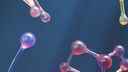
Featured coverage image. Source: Editorial desk.
A groundbreaking study published in Science has identified a protein called Arc as a key facilitator in the spread of Alzheimer's disease. This discovery unveils a promising new therapeutic target that could potentially halt the progression of toxic tau proteins between brain cells.
A groundbreaking study published in Science has identified a protein called Arc as a key facilitator in the spread of Alzheimer's disease. This discovery unveils a promising new therapeutic target that could potentially halt the progression of toxic tau proteins between brain...
June 30, 2026 — The quest to decode Alzheimer's disease has entered a transformative era. For decades, researchers, clinicians, and families have battled this progressive neurodegenerative condition as it systematically strips away memories and identity. However, a landmark study published on June 30, 2026, in the journal Science provides a dramatic leap forward. Scientists have finally mapped the precise molecular mechanics behind how toxic proteins spread throughout the human brain, offering a targeted blueprint to halt the progression of Alzheimer's in its tracks.
This breakthrough arrives at a critical moment. With over 55 million people worldwide living with dementia in 2026, shifting the clinical focus from clearing historical brain waste to actively halting the cellular transmission of pathology promises to redefine the future of neurodegenerative therapy.
Alzheimer’s disease is a progressive, irreversible neurological disorder characterized by the gradual destruction of memory, cognitive function, and behavioral stability. At the cellular level, it is defined by the accumulation of extracellular amyloid-beta plaques and intracellular neurofibrillary tau tangles, which collectively disrupt synaptic communication, trigger chronic neuroinflammation, and lead to widespread neuronal death.
The physical symptoms of cognitive decline—such as memory loss, disorientation, and personality shifts—are actually the late-stage manifestations of a silent, microscopic process that begins decades before outward signs appear. The damage initially takes root in the entorhinal cortex and hippocampus, the brain's critical command centers for learning and memory formation. As the disease advances, these cellular abnormalities cascade into other regions of the brain, slowly dismantling the neural networks that control language, spatial reasoning, and eventually, basic bodily functions.
For over thirty years, the "amyloid cascade hypothesis" served as the primary foundation for Alzheimer's drug development. This theory posited that the accumulation of amyloid-beta plaques was the initial, driving event in the disease's pathogenesis. While the approvals of plaque-clearing monoclonal antibodies like Leqembi and Kisunla represented historic milestones, clinical reality has shown that clearing amyloid is only part of the solution. These therapies slow cognitive decline but do not stop it entirely, nor do they reverse established damage.
This clinical limitation has redirected scientific attention toward the tau protein. Under physiological conditions, tau acts as a structural scaffold, stabilizing microtubules that transport nutrients and molecules down the length of the neuron. In the Alzheimer's brain, however, tau undergoes pathological hyperphosphorylation. This structural mutation causes the proteins to detach from microtubules, misfold, and aggregate into toxic neurofibrillary tangles.
Crucially, the density and anatomical spread of these tau tangles correlate directly with the severity of clinical dementia. While amyloid plaques accumulate early and plateau, tau spreads like a slow-moving wildfire from neuron to neuron, leaving a trail of cellular death in its wake. Understanding how to stop this wildfire has become the holy grail of modern neurology.
Arc-mediated tau propagation is the pathological mechanism whereby the activity-regulated cytoskeleton-associated (Arc) protein binds to toxic tau, packaging it into extracellular vesicles (EVs). These specialized lipid bubbles are then secreted by compromised neurons and absorbed by healthy neighboring cells, systematically spreading the disease across brain networks.
In the breakthrough study published in Science, an international research team led by Dr. Anya Sharma of the Global Institute for Neurodegenerative Diseases and neuroscientist Dr. Prajwal Tyagi revealed the exact molecular transport mechanism of tau. The researchers identified that the Arc protein—which typically plays a vital role in synaptic plasticity and memory consolidation—is hijacked by pathological tau.
Normally, Arc self-assembles into capsid-like structures and utilizes microscopic lipid-bound bubbles called extracellular vesicles (EVs) to shuttle genetic material and signals between brain cells. In the presence of Alzheimer's pathology, however, toxic tau proteins attach themselves to Arc, effectively hitchhiking inside these extracellular vesicles. These tau-laden vesicles are subsequently expelled into the extracellular space, crossing the synaptic gap to merge with and infect healthy, vulnerable neurons.
By experimenting with mouse models of Alzheimer's, Dr. Tyagi and his colleagues observed a stunning phenomenon: when the gene responsible for producing the Arc protein was silenced or knocked out, the intercellular transmission of pathological tau was nearly eliminated. This discovery confirms that preventing the cellular transport of tau is a highly viable mechanism to halt the physical spread of the disease.
To understand how this molecular hijacking occurs, consider the sequential flow of pathological transmission within the neocortex:
[ diseased neuron ]
       │
       ▼ (toxic tau hyperphosphorylates and detaches)
[ free tau monomer/oligomer ]
       │
       ▼ (binds to the synaptic protein "Arc")
[ Arc-tau complex formation ]
       │
       ▼ (encapsulated into a lipid-bound extracellular vesicle)
[ extracellular vesicle (EV) secretion ]
       │
       ▼ (crosses the synaptic cleft)
[ healthy neuron uptake ] ──► [ propagation of new tangles ]
This elegant yet destructive pathway explains why early-stage interventions have historically struggled to achieve long-term efficacy. While the neuron may attempt to purge itself of toxic tau by expelling it, the biological machinery inadvertently delivers the pathogen directly to neighboring healthy cells, fueling a systemic decline.
By identifying Arc as the primary vector for tau propagation, the medical community has gained a highly specific, druggable target. Instead of attempting to clear massive protein aggregates after they have already caused widespread damage, future treatments can focus on containment.
Several promising therapeutic strategies are currently being conceptualized based on this model:
By keeping the pathology isolated to its initial site of origin, clinicians could effectively "quarantine" the disease. This would preserve healthy brain regions, extending cognitive vitality and drastically improving the quality of life for aging populations.
The societal imperative for disease-modifying therapies is underscored by the compounding economic and human costs of dementia. The global footprint of cognitive decline is expanding at an unsustainable rate, as shown in the updated 2026 impact assessment:
| Healthcare & Economic Metric | Global Statistics (2026) | United States Statistics (2026) |
|---|---|---|
| Current Patient Population | 55 Million (65% Alzheimer's) | 5.7 Million (5.1 Million over age 65) |
| Projected Population (2050) | 139 Million | 13.8 Million |
| Annual Direct Medical Costs | €1.1 Trillion | $409 Billion |
| Indirect & Hidden Quality-of-Life Losses | €350 Billion | $320 Billion (Patient) / $15 Billion (Caregiver) |
| Unpaid Caregiving Contribution | 18 Billion Hours (Est.) | 6.8 Billion Hours ($237 Billion equivalent value) |
The financial figures capture only a fraction of the reality. The emotional toll on families and the structural strain on healthcare networks demand a rapid shift from palliative care to decisive biological interventions.
While the discovery of Arc's role in tau transmission represents a monumental milestone, transitioning this laboratory breakthrough into a clinically approved medication requires a systematic, multi-phase pipeline.
According to Dr. Jeffrey L. Cummings, a leading authority on neurodegenerative therapeutics, the Alzheimer's drug pipeline in 2026 is broader and more diverse than ever before. There are currently 192 active clinical trials globally, evaluating 158 unique therapeutic agents. This robust ecosystem ensures that as new cellular targets like Arc are discovered, the infrastructure is already in place to rapidly design, screen, and test compatible molecules.
Moving forward, the primary challenge will be to engineer therapeutic molecules that can successfully cross the blood-brain barrier (BBB) and selectively inhibit pathological Arc-tau interactions without disrupting the physiological roles of Arc in healthy learning and memory. Nevertheless, for the millions of families navigating the dark shadow of this disease, this discovery provides a clear, scientifically grounded path forward.
The Arc protein normally forms capsid-like structures inside neurons to package genetic material and signals into small, lipid-bound spheres called extracellular vesicles. In Alzheimer's disease, pathological tau proteins hijack this mechanism by binding to Arc. This binds the toxic tau inside the vesicles, which are then secreted into the extracellular space and absorbed by healthy neighboring neurons, spreading the pathology through the brain's networks.
Traditional treatments, such as recently approved monoclonal antibodies, primarily target amyloid-beta plaques. While effective at clearing these plaques, they do not fully halt cognitive decline once tau tangles have begun to spread. Focusing on tau propagation addresses the actual driver of physical brain atrophy and cognitive decline, aiming to isolate the pathology and prevent it from damaging healthy brain regions.
Developing a new class of therapeutics typically takes several years. Scientists must first design and refine molecules that can block Arc-tau binding, demonstrate safety in preclinical animal models, and then progress through three rigorous phases of human clinical trials. However, because the target is so precise, researchers can utilize advanced computer-aided drug design to accelerate the early stages of discovery.
While there are no specific lifestyle modifications that can directly block the Arc-tau binding pathway, maintaining general brain health remains crucial. Regular aerobic exercise, a Mediterranean-style diet, proper sleep hygiene, and cognitive stimulation have all been shown to support synaptic integrity, reduce chronic neuroinflammation, and potentially bolster the brain's resilience against the spread of pathological proteins.
Featured image by Robina Weermeijer on Unsplash
AI BlogX is committed to high editorial standards. For time-sensitive or critical topics, please verify claims against original primary sources.
Authoritative and trend-focused coverage across business, sports, entertainment, health, lifestyle, politics, science, and technology.
More Desks
© 2026 AI BlogX. All rights reserved.
Trend-focused editorial workflow
Stories are monitored from trending signals, then processed for accurate summaries, fact-checking, and desk oversight.
Editorial policy