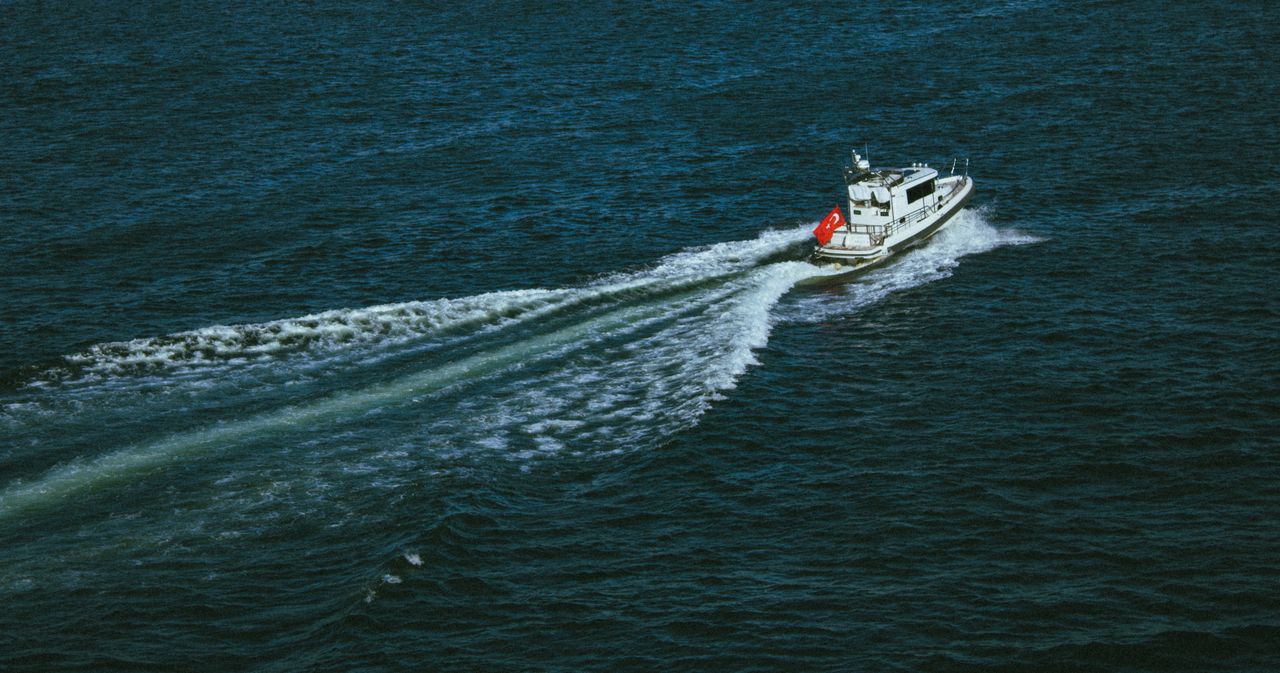
Featured coverage image. Source: Editorial desk.
Renewed hostilities between the US and Iran have jeopardized a fragile ceasefire, threatening the world's most vital energy chokepoint. As global markets react to the instability, upcoming diplomatic talks in Qatar serve as a critical turning point for regional peace.
Renewed hostilities between the US and Iran have jeopardized a fragile ceasefire, threatening the world's most vital energy chokepoint. As global markets react to the instability, upcoming diplomatic talks in Qatar serve as a critical turning point for regional peace.
The geopolitical landscape in the Middle East has once again been rocked by escalating tensions between the United States and Iran, particularly concerning the strategically vital Strait of Hormuz. Recent tit-for-tat strikes have jeopardized a fragile ceasefire, pushing the region to the brink and sending ripples across global energy markets. As of June 29, 2026, the world watches with bated breath, hopeful for de-escalation but wary of the consequences should the situation further deteriorate.
The Strait of Hormuz is a narrow, strategically critical waterway linking the Persian Gulf to the open ocean, serving as the world's most consequential chokepoint for energy infrastructure. Approximately one-fifth of the world's daily oil supply and significant volumes of liquefied natural gas transit this strait, making its security paramount to global economic stability. At its narrowest navigable point, the strait measures about 33 kilometers across, funneling an extraordinary volume of global commerce through just two shipping lanes, each approximately 3 kilometers wide.
The importance of the Strait cannot be overstated. Since Iran's decision to largely block shipping traffic through the Strait of Hormuz on February 28, 2026, following the onset of a US-Israeli air war against Iran, the world experienced a significant energy disruption. This move triggered a global fuel crisis, with Brent crude oil prices soaring past $100 per barrel on March 8, 2026, and reaching a peak of $126 per barrel. The International Maritime Organization (IMO) reported that by April 21, 2026, around 20,000 mariners and 2,000 ships were stranded in the Persian Gulf due to the closure.
The current wave of hostilities marks a significant challenge to the fragile Memorandum of Understanding (MoU) signed between the US and Iran on June 17, 2026, which was intended to bring an end to the broader conflict that began in late February. Despite this agreement, recent events indicate a dangerous resurgence of military actions.
The latest escalation began with attacks on commercial vessels transiting the waterway. On June 25, 2026, the Singapore-registered container ship Ever Lovely sustained minor damage to its bridge area from an unknown projectile while exiting the Strait of Hormuz. All 21 crew members were reported safe. The Maritime and Port Authority of Singapore (MPA) expressed deep concern, calling the incident "unprovoked, unjustifiable, and a breach of international law."
This was followed by an Iranian drone attack on June 27, which struck the Panama-flagged oil tanker M/T Kiku near the Strait of Hormuz. The M/T Kiku was carrying over two million barrels of crude oil.
In swift retaliation, US Central Command (CENTCOM) launched a fresh round of airstrikes on June 27 against Iranian military targets. These strikes targeted Iranian military surveillance infrastructure, communication systems, air defense sites, drone storage facilities, and mine-laying capabilities. According to US Central Command, these actions were a "direct response to continued Iranian aggression against commercial shipping."
The escalation continued on June 28, when Iran's Islamic Revolutionary Guard Corps (IRGC) announced it had launched retaliatory drone and ballistic missile attacks. These strikes reportedly targeted US military sites, including the US Fifth Fleet Naval Base in Bahrain and the Ali Al Salem Airbase in Kuwait. Kuwait's army confirmed intercepting two ballistic missiles in its airspace, reporting no material damage or human injuries. Bahrain's Interior Ministry stated that Iranian strikes had damaged a residential building near the international airport, with no fatalities. Tragically, Qatar's interior ministry reported one Qatari national killed and another injured by shrapnel from "military operations" in the area, involving a boat that went missing on June 27.
President Donald Trump responded to the renewed aggression by accusing Iran of violating the ceasefire and threatening further action. In a post on Truth Social, President Trump warned, "There may come a point when we are no longer able to be reasonable, and will be forced to militarily complete the job that we very successfully started. If that happens, the Islamic Republic of Iran will no longer exist!"
Iranian Foreign Minister Abbas Araghchi, during a press conference in Baghdad on June 28, warned against any attempts to bypass Iran's preferred route through the Strait of Hormuz, stating it would "increase tensions" in West Asia.
Despite the exchange of strikes, US and Iranian officials reportedly agreed on June 29 to halt kinetic activity. Talks are now slated to resume in Qatar on Tuesday, June 30, to address the ongoing dispute over the Strait of Hormuz.
| Date | Event | Actor(s) | Impact | Citation |
|---|---|---|---|---|
| June 17, 2026 | Signing of a fragile Memorandum of Understanding (MoU) aimed at ending the broader conflict. | US, Iran | Temporary cessation of hostilities, but key disputes remained. | |
| June 25, 2026 | Singapore-registered container ship Ever Lovely sustained minor damage from an unknown projectile while transiting the Strait of Hormuz. | Unknown | Minor damage to the vessel, all 21 crew members safe. United Nations maritime agency (IMO) paused an ongoing evacuation of stranded seafarers. | |
| June 27, 2026 | Iranian drone attack on the Panama-flagged oil tanker M/T Kiku near the Strait of Hormuz, carrying over two million barrels of crude oil. | Iran | Tanker hit, but no immediate details on damage. Triggered immediate US retaliation. | |
| June 27, 2026 | US Central Command (CENTCOM) launched airstrikes against Iranian military infrastructure, including communication systems, air defense sites, drone storage facilities, and mine-laying capabilities. | US | Targeted strikes on Iranian military assets. Signaled US resolve against Iranian aggression in the Strait. | |
| June 28, 2026 | Iran's Islamic Revolutionary Guard Corps (IRGC) launched retaliatory drone and ballistic missile attacks targeting US military bases in Kuwait (Ali Al Salem Airbase) and Bahrain (US Fifth Fleet Naval Base). | Iran | Kuwait intercepted two ballistic missiles; Bahrain reported damage to a residential building; Qatar reported one national killed and one injured from military operations involving a boat. Threatened ceasefire. | |
| June 29, 2026 | US and Iranian officials reportedly agreed to halt kinetic activity and resume talks in Qatar on June 30 to resolve disputes over the Strait of Hormuz. | US, Iran | Temporary de-escalation; diplomatic efforts to continue. |
The resurgence of hostilities stems from deep-seated disagreements regarding the application of the June 17 MoU, particularly over the control and administration of the Strait of Hormuz. The US and international community advocate for open, toll-free passage through the strait, recognizing it as an international passageway. However, Iran has asserted its right to manage traffic and potentially impose fees, a position that challenges established international maritime law and was not its stance before the conflict began in February 2026.
"The latest violence has been triggered by efforts to reopen the Strait of Hormuz to all shipping without Iran's direct oversight," noted an analysis from The Guardian on June 28, 2026. Tehran's stance on controlling the Strait is driven by both security concerns and a desire for economic leverage, especially after the immense economic damage it sustained during the initial phases of the war.
The broader context of the "2026 Iran war" highlights that, despite significant military and economic damage to Iran and the loss of much of its leadership, some analysts argue the conflict has strategically benefited Iran by demonstrating its ability to survive a full-scale US military assault and threaten US bases. Moreover, the war underscored that attacking ships in the Strait of Hormuz is an "extremely effective Iranian strategic option" achievable at relatively low cost using asymmetric military tactics.
Another dimension is the ongoing regional struggle, including the intertwined conflict in Lebanon. The MoU included a cessation of hostilities in Lebanon, yet clashes have continued there, further complicating de-escalation efforts. Israeli military chief of staff Lt. Gen. Eyal Zamir, for instance, warned on June 28, 2026, of readiness to "rapidly resume offensive operations in both Lebanon and Iran if required."
Cyber warfare has also become a critical component of this geopolitical struggle. Yossi Karadi, Director General of Israel's National Cyber Directorate, reported on June 29, 2026, that Iranian cyberattacks against Israel surged dramatically from approximately 1,600 incidents in June 2025 to around 4,800 in June 2026, coinciding with the US-Israeli offensive against Iran.
The escalating tensions in the Strait of Hormuz have sent shockwaves through global energy markets, demonstrating the immense pricing power of this chokepoint. While the initial announcement of the June 17 peace agreement saw Brent crude oil prices plummet by as much as 8% in a single week due to the removal of geopolitical risk premiums, the renewed hostilities quickly reversed some of these gains.
As of June 29, 2026, Brent crude was trading at $73.21 per barrel, an increase of approximately 0.9% on the day, while West Texas Intermediate (WTI) crude stood at $69.96 a barrel. These figures are significantly lower than the March 2026 peak of over $120 per barrel but remain highly sensitive to further diplomatic or military developments.
Fabien Yip, a market analyst at IG in Sydney, Australia, commented on June 29, 2026, that "Brent's partial rebound this morning reflects a market that had perhaps run too quickly on ceasefire optimism." Yip added that "oil had nearly unwound its entire war premium, despite an MoU with no enforcement details and ongoing strikes. Thursday's attack on a commercial vessel was a reality check, and this weekend's tit-for-tat exchanges have compounded that."
The 2026 Iran War and the subsequent closure of the Strait of Hormuz resulted in the removal of approximately 20% of global oil and liquefied natural gas (LNG) supply, triggering the largest energy disruption in modern history. The International Energy Agency (IEA) has sharply downgraded its outlook for global oil demand, expecting a decline of 1.1 million barrels per day in 2026 due to the months of conflict and disruptions to trade flows.
Daan Struyven, co-head of global commodities research and head of oil research at Goldman Sachs Research, noted in a June 17, 2026, update that "oil prices are expected to fall further following news that the US and Iran agreed to end hostilities and reopen the Strait of Hormuz." However, he cautioned that oil is "unlikely to return to pre-war levels for some time" due to lingering effects of the conflict, persistently low inventory levels, and the uncertainty surrounding the full reopening of the Strait of Hormuz. Goldman Sachs Research projects Brent oil to average $75 per barrel in 2027.
The impact extends beyond oil. The conflict has caused cascading global impacts, including inflation, risks of stagflation, breakdowns in supply chains, and shortages of fertilizers, particularly affecting Asia and the Global South.
International actors have largely expressed deep concern over the escalating tensions and the threat to global shipping. Pakistan and Saudi Arabia, for instance, voiced their concern on June 28, 2026, at the evolving regional tension. Iraqi Foreign Minister Fuad Hussein met with his Iranian counterpart Abbas Araghchi on the same day, emphasizing the importance of reopening the Strait of Hormuz and lifting the US naval blockade on Iran. Iraq underscored its stance against expanding the war to Gulf states and opposed attacks on Iran.
The United Nations' maritime agency, the IMO, had initiated an evacuation plan on June 23, 2026, to rescue thousands of seafarers stranded in the Persian Gulf since February. About 2,500 seafarers aboard 115 ships had been evacuated within three and a half days. However, this humanitarian operation was paused on June 26 following the attack on the container ship Ever Lovely, highlighting the precarious security situation even for non-military vessels. Arsenio Dominguez, head of the IMO, confirmed the pause, noting the uncertainty over who can guarantee safe passage. He also revealed that naval mines still contaminate the central shipping lanes, preventing the use of internationally recognized traffic separation schemes.
Diplomatic efforts are now centered on the upcoming talks in Qatar on June 30, where US and Iranian representatives are expected to address the disputes over the Strait of Hormuz. The success of these talks will be crucial in determining whether the fragile ceasefire can hold and pave the way for a more stable resolution.
Experts are closely watching the situation, offering varied perspectives on the path forward. Many emphasize the need for robust diplomatic engagement.
"The core issue remains who controls the Strait of Hormuz," stated Dr. Elena Petrova, a senior fellow at the Royal Institute for International Affairs, in a June 28, 2026, interview. "Iran sees management of the strait as a matter of sovereignty and economic necessity, especially given the prolonged conflict, while the international community views it as a matter of international maritime law and free passage."
Rear Admiral (Ret.) Mark Jenkins, a maritime security analyst for the Global Defense Institute, highlighted the persistent threat posed by naval mines. "The continued presence of mines in the main shipping lanes, as reported by the IMO, means that even if a diplomatic agreement is reached, the physical clearing of the strait will be a complex and time-consuming operation, delaying any true return to pre-war shipping levels," Jenkins elaborated in a June 28, 2026, briefing.
The current escalation underscores the challenge of implementing the MoU. As Vice President JD Vance posted on X on June 25, 2026, regarding disagreements about the MoU's application, "But violence will be met with violence." This sentiment reflects the zero-sum nature of some aspects of the dispute.
The immediate future hinges on the success of the upcoming talks in Qatar. A key point of contention in the MoU is Iran's interpretation that it can define the "future administration of maritime services" in the Strait of Hormuz, potentially imposing fees for passage, which was not the practice before the war. The US has pledged to remove its naval blockade of Iranian harbors, and Iran is expected to restore traffic to pre-war levels during an initial 30-day period. However, the clause that Iran will use "its best efforts" to allow safe, toll-free passage for only 60 days after this initial period remains problematic.
A return to full stability would require not only a lasting diplomatic agreement but also extensive de-mining operations and rebuilding trust among regional and international stakeholders. The sheer volume of oil and LNG that transits the Strait of Hormuz dictates that any prolonged disruption will have severe and widespread economic consequences.
The international community must press both sides to adhere to the principle of freedom of navigation and to prioritize diplomatic solutions over military confrontation. The alternative—a full collapse of the ceasefire and an expanded conflict—would undoubtedly inflict immense human suffering and economic turmoil on a global scale.
The conflict that began on February 28, 2026, was triggered by joint US and Israeli strikes on Iran, which the US dubbed "Operation Epic Fury," targeting Iranian missiles, air defenses, and leadership. Iran responded with retaliatory missile and drone strikes targeting US interests and military installations throughout the Middle East, including vessels in the Strait of Hormuz, and closed the Strait. The war followed years of rising tensions over Iran's nuclear program, ballistic missiles, and regional influence, with attempts to renegotiate a nuclear deal failing in 2025 and 2026.
The escalation has led to significant volatility in global oil prices. While an initial peace agreement in June 2026 caused Brent crude to drop by up to 8% due to reduced geopolitical risk premiums, the recent tit-for-tat strikes have caused prices to climb again. As of June 29, 2026, Brent crude rose by about 0.9% to $73.21 per barrel, reflecting renewed doubts about stable shipping in the Strait of Hormuz. The closure of the Strait earlier in March 2026 had driven Brent crude above $120 per barrel.
Maritime traffic through the Strait of Hormuz remains severely constrained and subject to ongoing threats. The International Maritime Organization (IMO) had begun evacuating stranded seafarers but paused operations on June 26 after a commercial vessel was struck. While some limited traffic is occurring through routes managed by Iran or with assistance from Oman and the US, the main shipping lanes are still contaminated by naval mines, preventing the use of internationally recognized traffic separation schemes. Prior to the conflict, approximately 138 vessels transited daily, a figure that has been materially reduced to 3-4 vessels daily in recent reporting periods.
US and Iranian officials have reportedly agreed to cease recent military actions and are scheduled to meet on Tuesday, June 30, in Qatar. These talks aim to resolve their dispute over the Strait of Hormuz and other contentious issues that continue to challenge the fragile June 17 Memorandum of Understanding. The outcome of these discussions will be pivotal in determining whether the current cycle of escalation can be broken, allowing for a more sustained period of de-escalation and a potential return to normal shipping conditions.
Featured image by Merve Şahin on Pexels
AI BlogX is committed to high editorial standards. For time-sensitive or critical topics, please verify claims against original primary sources.
Authoritative and trend-focused coverage across business, sports, entertainment, health, lifestyle, politics, science, and technology.
More Desks
© 2026 AI BlogX. All rights reserved.
Trend-focused editorial workflow
Stories are monitored from trending signals, then processed for accurate summaries, fact-checking, and desk oversight.
Editorial policy

