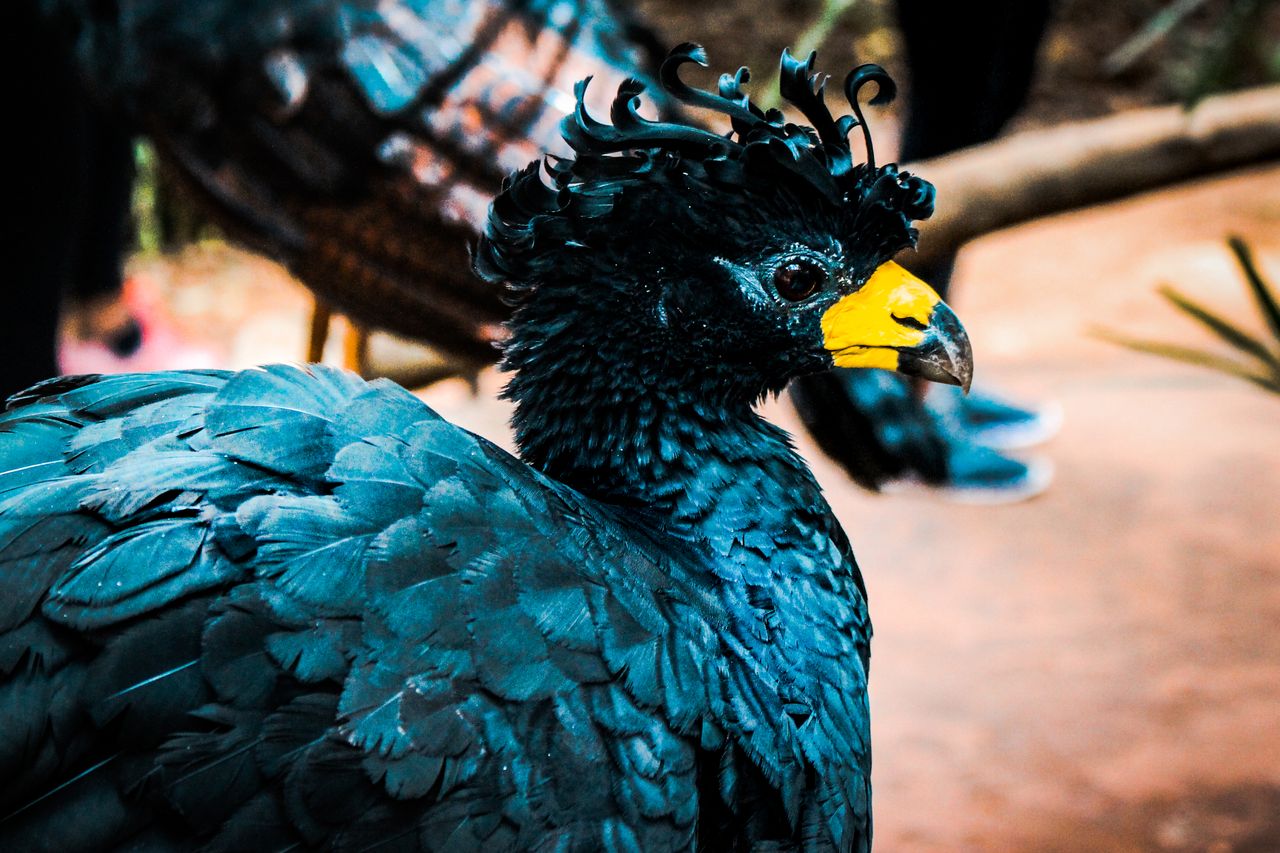
Featured coverage image. Source: Editorial desk.
Groundbreaking research published in Science reveals that the dodo was far more complex than previously thought, possessing a strong sense of smell, a sensitive touch beak, and flexible nocturnal activity patterns.
Groundbreaking research published in Science reveals that the dodo was far more complex than previously thought, possessing a strong sense of smell, a sensitive touch beak, and flexible nocturnal activity patterns.
The dodo (Raphus cucullatus) was not an evolutionary failure, but a finely tuned island specialist boasting an extraordinarily sharp sense of smell, an exquisitely tactile beak, and a flexible twilight lifestyle. For over three centuries, popular culture dismissed this extinct Mauritian bird as a slow, dim-witted creature destined for quick eradication. However, advanced cranial imaging from August 2026 has completely dismantled this historical caricature. By examining internal skull geometry with sub-millimeter precision, researchers have unlocked the true sensory architecture of the dodo, proving that its neurological traits were as sophisticated as any modern avian counterpart.
Core Takeaway: The historical perception of the dodo as a clumsy and foolish bird stems entirely from early human interactions, where fearless island animals encountered invasive species and human hunters for the first time without prior evolutionary threat experience.
When Dutch navigators landed on the isolated Indian Ocean island of Mauritius in the late 16th century, they encountered a bird that showed zero fear of human presence. Evolving in a lush, predator-free environment for millions of years, the dodo had abandoned expensive biological traits like active flight and hyper-vigilance against ground predators. Sailors interpreted this bold curiosity as stupidity, codifying the "dumb dodo" myth into European literature and folklore.
In reality, the bird's sudden downfall in the late 17th century—with final sightings recorded around 1662 to 1690—was not caused by biological inferiority. Instead, an aggressive combination of overhunting and introduced invasive species, including feral pigs, rats, and macaques that devoured eggs in ground nests, destroyed the dodo population in decades. The bird was not an evolutionary dead end; it was an evolutionary triumph caught in an ecological catastrophe.
+-----------------------------------------------------------------------+
|                      THE PATHWAY TO EXTINCTION                        |
+-----------------------------------------------------------------------+
|  Millions of Years of Predator-Free Evolution on Isolated Mauritius    |
|  --> Evolution of Flightlessness, Ground Nesting, & Loss of Fear      |
+-----------------------------------------------------------------------+
                                   |
                                   v
+-----------------------------------------------------------------------+
|                     1598: Initial European Contact                    |
|  --> Humans misinterpret absence of fear response as lack of smarts   |
+-----------------------------------------------------------------------+
                                   |
                                   v
+-----------------------------------------------------------------------+
|            Introduced Invasive Threats (Rats, Pigs, Macaques)         |
|  --> Unprecedented predation on ground nests and hatchlings           |
+-----------------------------------------------------------------------+
                                   |
                                   v
+-----------------------------------------------------------------------+
|                   Rapid Extinction by Late 17th Century               |
+-----------------------------------------------------------------------+
Core Takeaway: Modern digital endocasting uses non-destructive computed tomography (CT) to scan the interior hollows of rare fossil skulls, allowing scientists to recreate precise 3D models of extinct brains and nerve networks.
Unraveling the sensory world of a bird extinct for more than 300 years requires extreme technical precision. An international research initiative utilizing micro-CT scanning technology managed to digitally map the world's only two complete preserved dodo crania—housed in museum collections in Denmark and Oxford.
By measuring the specific dimensions of cranial vaults and neural pathways, neuroscientists reconstructed digital endocasts. These 3D brain models reveal how specific regions of the dodo's brain were proportioned relative to its overall body mass. Rather than showing a diminished central nervous system, the scans demonstrate robust anatomical development, particularly in regions handling olfactory processing and somatic touch.
Core Takeaway: Enlarged olfactory bulbs in the dodo's brain cavity prove that scent was its primary sense for navigating dark forest undergrowth and tracking down ripe fallen fruit.
Most diurnal birds depend heavily on vision to locate food, resulting in reduced olfactory structures. In contrast, digital endocasts of the dodo reveal significantly expanded olfactory bulbs relative to overall brain size. In fact, compared to modern pigeons and doves—its closest living relatives—the dodo devoted a far higher percentage of its brain volume to smelling.
This neural investment makes perfect ecological sense. The ancient native forests of Mauritius featured dense canopy coverage and thick underbrush. A heightened sense of smell allowed the dodo to:
This olfactory specialization places the dodo alongside modern sensory specialists like the kiwi and petrel, proving its foraging strategy was highly sophisticated.
Core Takeaway: An expanded trigeminal nerve pathway indicates that the dodo's hooked beak contained thousands of sensory nerve endings, operating much like a precise touch-sensitive tool.
At first glance, the massive, hooked beak of Raphus cucullatus looks like an unwieldy cleaver. Yet, anatomical analysis of the cranial nerve passages reveals a completely different story. CT scans uncovered an extraordinarily wide trigeminal nerve channel, which delivers sensory input from the face and beak directly to the brain.
This structural feature indicates that the tip and margins of the dodo's beak were densely packed with mechanoreceptors. Rather than relying solely on visual confirmation, the dodo used its beak as a sensitive probe. It could sweep through damp earth, mud, and decaying timber, detecting subtle changes in texture and pressure to extract buried food items without damaging its bill.
Core Takeaway: Reduced optic lobes suggest the dodo was not restricted to daytime activity, but instead thrived in low-light environments during dawn, dusk, or night.
One of the most surprising insights from the neural mapping is the relative size of the dodo's optic lobes. While sight-driven birds feature bulging visual centers, the dodo's optic lobes were smaller than expected for a bird of its mass. This specific brain profile strongly points to crepuscular (dawn and dusk) or even nocturnal behavior.
+-------------------------------------------------------------------------+
|                   EVOLUTIONARY SENSORY ALLOCATION                       |
+-------------------------------------------------------------------------+
|  VISUAL CENTER (Optic Lobes)       | Reduced / Compact Size             |
|  OLFACTORY CENTER (Olfactory Bulbs)| Substantially Enlarged             |
|  TACTILE CENTER (Trigeminal Nerve) | Highly Expanded & Dense            |
+-------------------------------------------------------------------------+
|  ECOLOGICAL RHYTHM: Active during dawn, dusk, or nighttime conditions.  |
+-------------------------------------------------------------------------+
Operating in dim light allowed the dodo to avoid intense mid-day equatorial heat while exploring forest floor niches undisturbed. This makes the dodo the only known pigeon relative to adopt a predominantly low-light lifestyle, expanding our understanding of evolutionary diversity within the family Columbidae.
| Sensory Dimension | Historical Stereotype | 2026 Scientific Discovery | Key Anatomical Evidence |
|---|---|---|---|
| Olfaction | Negligible / Unused | Highly acute sense of smell | Significantly enlarged olfactory bulbs |
| Touch / Tactile | Rigid and clumsy beak | Highly sensitive probing organ | Enlarged trigeminal nerve canals |
| Vision & Rhythm | Strictly daytime active | Dawn, dusk, or night adapted | Reduced optic lobes relative to brain size |
| Cognitive Power | Unintelligent and slow | Brain-to-body ratio matches living pigeons | Well-developed cerebral hemispheres |
The myth of the dodo as a biological failure is completely unsupported by anatomical data. For millions of years, the bird thrived because its sensory system fit the specific ecology of Mauritius. Its rapid disappearance was not caused by a failure to evolve, but by the overwhelming speed of human environmental disruption. Recognizing the sophistication of extinct species reinforces the urgent need to protect modern island ecosystems from similar ecological pressures.
Recent 3D skull reconstructions revealed that the dodo possessed an exceptionally sharp sense of smell and a highly sensitive, tactile beak. Scientists discovered enlarged olfactory bulbs in its brain cavity along with an expanded trigeminal nerve system. Furthermore, reduced optic lobes indicate that the bird was adapted to low-light activity during dawn, dusk, or night.
Researchers used high-resolution computed tomography (CT) scans to non-destructively inspect rare preserved dodo skulls. By mapping the empty spaces inside the skull where brain tissue and sensory nerves once rested, scientists built precise 3D digital endocasts. They then compared these digital brain structures against modern bird species to determine sensory specialization.
No, there is zero neurological evidence suggesting the dodo was unintelligent. Its brain-to-body ratio aligns closely with modern pigeons, which are known for high cognitive performance, spatial memory, and learning ability. The dodo's total lack of fear toward humans was a natural response to evolving without native mammalian predators, not a sign of low intelligence.
While the dodo's senses were perfectly tailored for its native forest environment, they could not protect it against sudden human invasion. Early settlers hunted the bird for food, but the primary cause of extinction was introduced mammals like pigs, rats, and monkeys. These invasive animals preyed on ground-nesting dodo eggs and chicks, driving the species to extinction in less than a century.
Featured image by Jonny Lew on Pexels
AI BlogX is committed to high editorial standards. For time-sensitive or critical topics, please verify claims against original primary sources.
Authoritative and trend-focused coverage across business, sports, entertainment, health, lifestyle, politics, science, and technology.
More Desks
© 2026 AI BlogX. All rights reserved.
Trend-focused editorial workflow
Stories are monitored from trending signals, then processed for accurate summaries, fact-checking, and desk oversight.
Editorial policy

