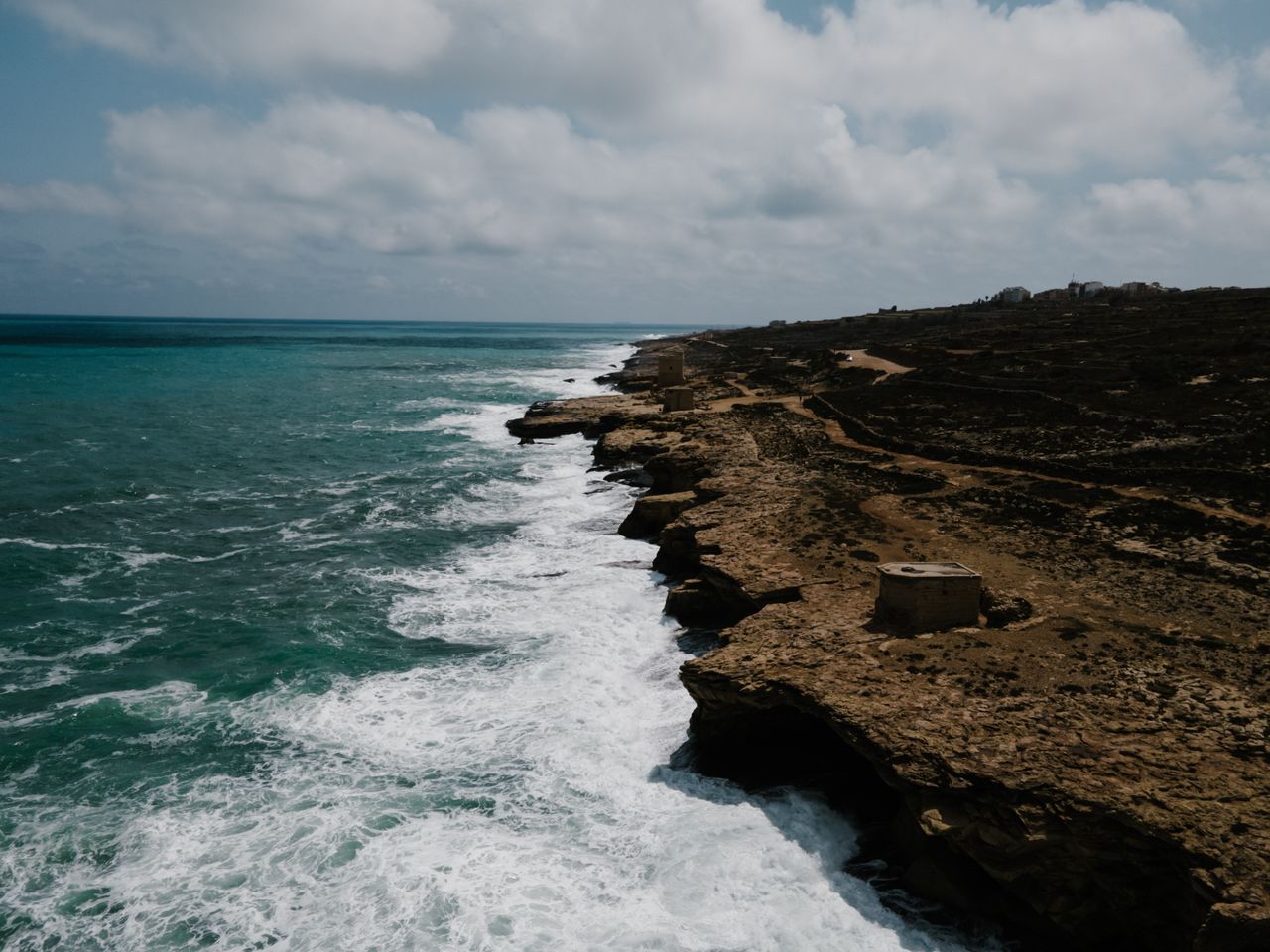
Featured coverage image. Source: Editorial desk.
The strategic Red Sea shipping lane faces severe disruption as the Iran-backed Houthi movement consolidates control over Yemen's western coastline. This escalation threatens international trade, global energy supplies, and exacerbates the humanitarian crisis.
The strategic Red Sea shipping lane faces severe disruption as the Iran-backed Houthi movement consolidates control over Yemen's western coastline. This escalation threatens international trade, global energy supplies, and exacerbates the humanitarian crisis.
The strategic maritime passage running through the Red Sea and the Bab el-Mandeb Strait stands as one of the world’s most critical commercial corridors. In September 2026, dramatic territorial advances by the Houthi movement along Yemen's western coastline transformed a localized military campaign into a systemic shockwave for international trade, global energy markets, and regional stability.
Definition: The Houthi movement (officially Ansar Allah) is a Zaidi Shia Islamist political and military organization rooted in northern Yemen's Saada Governorate. Functioning as a dominant political-military force in Yemen and a key pillar of Iran's regional "Axis of Resistance," the group exercises de facto control over major urban centers, critical coastlines, and national infrastructure.
Emerging during the 1990s under the leadership of Hussein Badreddin al-Houthi, the movement organized around religious revivalism, anti-imperialist rhetoric, and opposition to political marginalization. Following the 2014 takeover of Yemen's capital, Sanaa, under current leader Abdul-Malik al-Houthi, the group expanded its governance and military reach across northern and western Yemen. Armed with advanced weaponry—including ballistic missiles, anti-ship cruise missiles, and loitering munitions—the movement combines local governance with long-range power projection capabilities.
                    [ Iran's Axis of Resistance ]
                                  |
            +---------------------+---------------------+
            |                                           |
  [ Tactical & Financial ]                    [ Strategic Alignment ]
            |                                           |
            v                                           v
[ Ansar Allah (Houthis) ] <===============> [ Red Sea Power Projection ]
            |
            +--> Control of Saada, Sanaa, and Red Sea Coastal Chokepoints
Definition: The September 2026 offensive refers to a rapid series of coordinated military operations by Houthi forces that resulted in the capture of key coastal districts, offshore islands, and maritime choke points along Yemen's western littoral zone, effectively securing operational control over the eastern rim of the Bab el-Mandeb Strait.
The strategic landscape shattered during the first two weeks of September 2026. Heavy kinetic engagements broke out in Taiz Governorate, rapidly expanding into a sweeping Houthi campaign against the Presidential Leadership Council (PLC). Within days, Houthi units overran state defenses, capturing the historic port city of Mokha, the coastal hubs of Hays and Al-Khawkhah in Al-Hudaydah Governorate, and the strategic al-Omari military encampment.
Crucially, Houthi amphibious elements seized Mayyun Island (also known as Perim Island) and Zuqar Island. By controlling Perim Island—situated directly inside the narrowest constriction of the Bab el-Mandeb Strait—the Houthis established direct line-of-sight oversight and targeted military engagement capabilities over passing maritime traffic.
| Territorial Zone | Military Significance | Maritime Impact |
|---|---|---|
| Mayyun (Perim) Island | Dominates the narrowest channel of Bab el-Mandeb | Direct sightline & short-range strike capability over all shipping |
| Port of Mokha | Historic deep-water coastal anchor | Tactical staging ground for surface drones and coastal defense batteries |
| Zuqar Island | Central Red Sea maritime lookout | Radar surveillance and medium-range missile deployment zone |
| Taiz Coastline | Elevated coastal artillery positions | Interdiction of naval vessels approaching southern Red Sea approaches |
This offensive triggered severe displacement across western Yemen. Thousands of civilian families fled active combat zones in Taiz and Hodeidah, compounding an already precarious humanitarian situation where emergency medical facilities operated under critical resource constraints.
Definition: The Red Sea maritime corridor is an international trade route connecting the Indian Ocean to the Mediterranean Sea via the Bab el-Mandeb Strait, the Red Sea basin, and the Suez Canal. It facilitates the shortest nautical route between Asian manufacturing hubs and European consumer markets.
The Bab el-Mandeb Strait serves as an irreplaceable choke point in the global supply chain architecture. Measuring less than 20 nautical miles wide at its narrowest point, the strait constrains vast volumes of international trade through a tightly bottlenecked maritime highway.
[ Indian Ocean / Arabian Sea ]
              |
              v
  [ Bab el-Mandeb Strait ] <=== (Houthi Coastal Positions & Perim Island)
              |
              v
       [ Red Sea Basin ]
              |
              v
   [ Suez Canal / Mediterranean ]
Definition: Maritime commerce disruption in the Red Sea encompasses hostile interdiction tactics—such as anti-ship ballistic missile strikes, uncrewed surface vessel (USV) detonations, drone attacks, and commercial vessel seizures—designed to deny freedom of navigation through international waters.
The consolidation of Houthi power along the coastline dramatically elevates the tactical threat to commercial shipping. Previously firing long-range missiles from deep within Yemen's interior, Houthi forces now operate direct-observation radar, coastal artillery, and anti-ship missile batteries directly along the shoreline.
                                  [ Attack Vectors ]
                                          |
        +---------------------------------+---------------------------------+
        |                                 |                                 |
        v                                 v                                 v
[ Anti-Ship Missiles ]        [ Uncrewed Surface Vessels ]        [ Reconnaissance Drones ]
        |                                 |                                 |
        +---------------------------------+---------------------------------+
                                          |
                                          v
                         [ Red Sea Commercial Shipping ]
The physical proximity to international shipping lanes reduces detection windows for naval defense systems from minutes to seconds. Ships traversing the narrow channel around Perim Island must operate within visual and short-range strike distance of Houthi-controlled shorelines.
The strategic compromise of the Bab el-Mandeb forces maritime carriers into severe operational trade-offs, reshaping global logistics economics:
| Economic Metric | Standard Route (Suez Transit) | Alternate Route (Cape of Good Hope) | Financial & Operational Impact |
|---|---|---|---|
| Transit Duration | 20–24 Days (Asia to N. Europe) | 34–38 Days (Asia to N. Europe) | Adds 10–14 days per voyage |
| Fuel Expenses | Standard burn rates | Elevated high-speed fuel consumption | Increases fuel costs by $400k–$800k per leg |
| Container Rates | Baseline index | 30% to 50% structural surcharge | Pushes spot rates significantly above historical averages |
| Insurance Premiums | Standard war-risk coverage | Exponential war-risk surcharges or denial | Quadruples hull insurance costs per transit |
Rerouting vessels around the southern tip of Africa absorbs massive maritime container capacity, delays manufacturing inputs, and injects structural inflation into global consumer goods markets.
Definition: The international response to the Red Sea crisis consists of a multi-tiered framework involving UN Security Council resolutions, multinational naval escort operations, targeted defensive airstrikes, and regional maritime defense coalitions aimed at restoring freedom of navigation.
To counter escalating attacks, international actors launched several overlapping security initiatives:
Despite these countermeasures, the Houthi movement maintains operational leverage by exploiting low-cost asymmetric technologies—such as autonomous suicide boats and low-altitude loitering munitions—to challenge high-cost naval defense systems.
Definition: The geopolitical impact of the Houthi expansion involves long-term leverage over international shipping lanes, increased friction among global superpowers, and severe degradation of local socio-economic and humanitarian stability in Yemen.
The consolidation of coastal control dramatically alters both regional diplomacy and local human security:
Without a comprehensive political agreement addressing the root causes of the Yemeni civil war, the security of the Red Sea shipping lane remains fundamentally unstable.
The Bab el-Mandeb Strait is a crucial maritime choke point connecting the Red Sea to the Gulf of Aden and the Indian Ocean. Serving as the southern gateway to the Suez Canal, it facilitates the transit of approximately 12% to 15% of global trade and over 8 million barrels of oil per day. Control over this narrow channel grants significant leverage over major maritime trade routes linking Asia and Europe.
When Houthi forces control key coastal positions and target commercial shipping, maritime carriers often reroute vessels around Africa’s Cape of Good Hope. This detours journeys by 10 to 14 days, increasing fuel consumption, vessel operating costs, and insurance premiums. These higher operational expenses result in increased freight rates and supply chain delays, ultimately raising prices for consumer goods worldwide.
Houthi forces employ asymmetric warfare tactics, combining anti-ship ballistic missiles, land-attack cruise missiles, explosive-laden uncrewed surface vessels (USVs), and loitering aerial drones. Operating directly from coastal positions and off-shore islands like Perim, they can target commercial ships and naval forces with minimal warning, challenging traditional maritime defense systems.
Restoring long-term stability requires a multi-faceted approach, including persistent international naval protection, robust diplomatic efforts to secure a durable political settlement within Yemen, and targeted enforcement of arms embargoes. Without resolving the underlying political and military conflicts in the region, permanent security for commercial shipping remains difficult to maintain.
Featured image by Polina ⠀ on Pexels
AI BlogX is committed to high editorial standards. For time-sensitive or critical topics, please verify claims against original primary sources.
Authoritative and trend-focused coverage across business, sports, entertainment, health, lifestyle, politics, science, and technology.
More Desks
© 2026 AI BlogX. All rights reserved.
Trend-focused editorial workflow
Stories are monitored from trending signals, then processed for accurate summaries, fact-checking, and desk oversight.
Editorial policy

