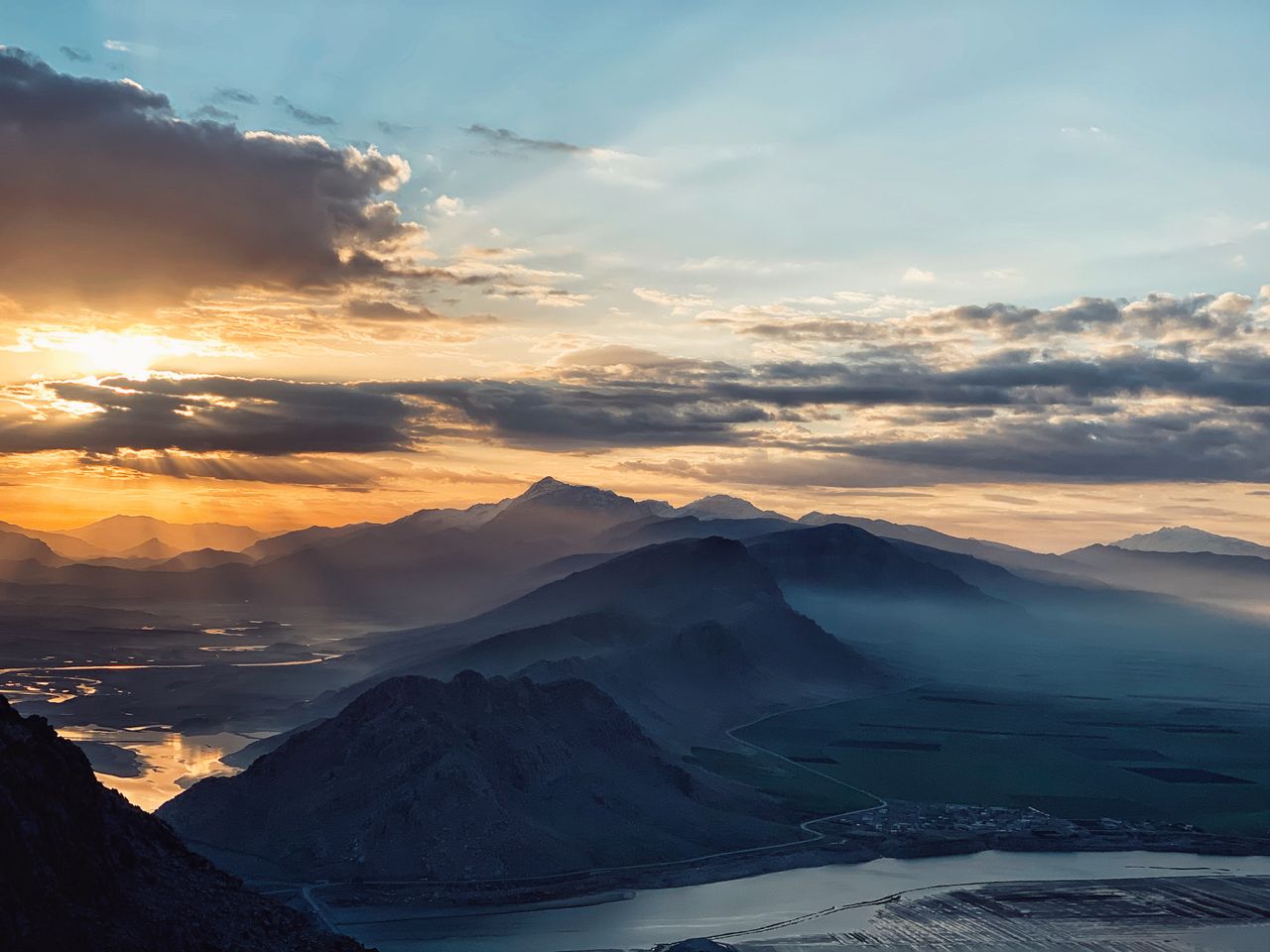
Featured coverage image. Source: Editorial desk.
On April 11, 2026, Iraq's Council of Representatives elected Nizar Amidi as the nation's sixth president since 2003, marking a crucial step in ending months of political deadlock. This election ushers in a new era for Iraq, as Amidi, a seasoned politician, steps into a role vital for national unity amidst pressing internal and external challenges.
On April 11, 2026, Iraq's Council of Representatives elected Nizar Amidi as the nation's sixth president since 2003, marking a crucial step in ending months of political deadlock. This election ushers in a new era for Iraq, as Amidi, a seasoned politician, steps into a role vi...
The echoes of parliamentary ballots have once again resonated through Baghdad, signaling a new chapter for Iraq. On April 11, 2026, Nizar Amidi, a prominent figure from the Patriotic Union of Kurdistan (PUK), was elected by the Council of Representatives as the sixth President of Iraq since the tumultuous year of 2003. This pivotal election concludes a prolonged period of political stagnation that had gripped the nation for months, offering a fresh start for a country grappling with complex internal dynamics and a volatile regional landscape. [1, 2]
Amidi's ascension to the presidency comes at a critical juncture, with Iraq facing myriad challenges ranging from economic reforms and governance issues to the lingering fallout of regional conflicts. His election, therefore, is not merely a procedural formality but a significant political development that could reshape Iraq's trajectory in the coming years.
The road to Iraq's presidency is an intricate one, defined by a power-sharing arrangement established after 2003. By convention, the largely ceremonial but strategically important role of president is reserved for a Kurd, while the prime minister, who holds executive authority, is a Shiite Arab, and the parliamentary speaker is a Sunni Arab. [3, 4] The 2026 presidential election was particularly contentious, following parliamentary elections in November 2025 that failed to produce a decisive majority, leading to a five-month delay in selecting a president. [1, 4]
The election process itself unfolded within the Council of Representatives, requiring multiple rounds of voting. Nizar Amidi, representing the Patriotic Union of Kurdistan (PUK), emerged as the leading candidate. In the first round, he secured 208 votes. [1, 4] As no candidate achieved the constitutional two-thirds majority required for an outright win in the initial ballot, the election proceeded to a second round. [1, 4] In this decisive runoff, Amidi triumphed with a commanding 227 votes, handily defeating his rival Muthanna Amin of the Kurdistan Islamic Union, who received 15 votes. [1, 2] This victory officially concluded the protracted political deadlock, allowing Iraq to move forward with the formation of a new government. [11]
Nizar Mohammed Saeed Amidi (born February 6, 1968, in Amedi, Dohuk province) brings a wealth of experience to the presidency, having spent nearly two decades navigating the complex corridors of Iraqi politics. An engineer by training, with a mechanical engineering degree from the University of Mosul, Amidi's career has been characterized by quiet diplomacy and consensus-building rather than public rhetoric. [2, 13]
Prior to his election, Amidi held the significant position of Minister of Environment in the government of Mohammed Shia al-Sudani from 2022 to 2024. During this tenure, he championed environmental issues, particularly water scarcity and climate change, elevating them to the forefront of national security concerns and representing Iraq at major international forums. [2, 13] His efforts underscored a pragmatic approach to governance, addressing critical, often overlooked, challenges facing the nation. [13]
Beyond his ministerial role, Amidi served as a key constitutional adviser to several former Iraqi presidents, including Jalal Talabani, Fuad Masum, and Barham Salih between 2005 and 2022, and briefly during Abdul Latif Rashid's term in 2022. This extensive experience within the presidential palace earned him a reputation as a skilled troubleshooter, adept at managing constitutional crises, drafting decrees, and fostering agreement among Iraq's diverse political factions. [2, 14] Fluent in both Arabic and Kurdish, he is often seen as a political translator capable of bridging the divides between Iraq's competing centers of power. [2, 14] Many Iraqi politicians consider him a political heir to the late President Jalal Talabani's approach, known for its emphasis on ethnic and sectarian diversity. [2]
Since the fall of Saddam Hussein's regime in 2003 and the subsequent establishment of a new federal parliamentary system, Iraq has sought to build democratic institutions amidst persistent instability. The presidency, while largely symbolic in terms of executive power, plays a crucial role in representing national unity and initiating the government formation process. [3, 15]
Before Nizar Amidi, five individuals held the presidential office since 2003, each navigating Iraq through complex political transitions and challenges. The list of presidents since 2003 highlights the evolution of Iraq's political landscape:
| President | Term Began | Term Ended | Political Party | Notes |
|---|---|---|---|---|
| Ghazi Mashal Ajil al-Yawer | June 28, 2004 | April 7, 2005 | Independent | Interim President |
| Jalal Talabani | April 7, 2005 | July 24, 2014 | Patriotic Union of Kurdistan (PUK) | First elected president under the new constitution |
| Fuad Masum | July 24, 2014 | October 2, 2018 | Patriotic Union of Kurdistan (PUK) | |
| Barham Salih | October 2, 2018 | October 17, 2022 | Patriotic Union of Kurdistan (PUK) | |
| Abdul Latif Rashid | October 17, 2022 | April 11, 2026 | Patriotic Union of Kurdistan (PUK) | Chose not to run for another term |
| Nizar Amidi | April 11, 2026 | Incumbent | Patriotic Union of Kurdistan (PUK) |
This succession underscores the convention that the presidency is typically held by a Kurd, specifically from the PUK, reflecting the delicate balance of power among Iraq's ethno-sectarian components.
President Amidi assumes office at a time of profound challenges for Iraq, both domestically and internationally. His long experience as a troubleshooter and consensus-builder will be put to the ultimate test.
President Amidi's immediate and most crucial task, following his oath of office, is to nominate a prime minister-designate. According to the Iraqi constitution, he has 15 days to task the leader of the largest parliamentary bloc with forming a new government. [3, 6] This individual will then have 30 days to assemble a cabinet and seek a vote of confidence from parliament. [6, 7] The Shiite Coordination Framework, a coalition of Iran-allied parties, has positioned former Prime Minister Nouri al-Maliki as a strong contender for the premiership, though this nomination could still be a source of contention. [4, 5]
This decision is arguably where the real power struggle lies, as the prime minister holds significant executive authority. Amidi's choice and his subsequent collaboration with the new prime minister will be pivotal in defining Iraq's policy direction, both domestically and internationally. Expectations are high for Amidi to leverage his experience and broad network to reinforce the presidency's traditional role as a guarantor of national unity and to prioritize safeguarding national sovereignty. [2, 9]
Iraq's stability is intrinsically linked to regional security. The election of a new president, especially one with Amidi's background in diplomacy and consensus-building, could offer opportunities for de-escalation and constructive engagement in a region fraught with tension. Iranian President Masoud Pezeshkian has already extended congratulations to Amidi, expressing optimism for deepening ties between the two nations, highlighting the regional recognition of this political shift. [19]
Amidi's presidency could potentially influence the dynamics of regional alliances and Iraq's strategic positioning. His commitment to prioritizing "Iraq First" and protecting the country's supreme national interests will guide his foreign policy, emphasizing collaboration for regional peace and stability. The international community will be closely watching how his administration addresses the complex interplay of internal reform and external pressures.
The election of Nizar Amidi as Iraq's sixth president since 2003 marks a significant political milestone, bringing an end to a period of uncertainty and opening a new chapter for the nation. His extensive experience, reputation as a consensus-builder, and commitment to national unity offer a beacon of hope for a country yearning for stability and progress. However, the path ahead is fraught with challenges, from deep-seated political divisions and economic woes to volatile regional conflicts. President Amidi faces the formidable task of steering Iraq through these turbulent waters, fostering domestic harmony, and safeguarding the nation's interests on the international stage. His presidency will be a critical test of Iraq's resilient democratic process and its capacity to build a prosperous and stable future for all its citizens. The world watches with cautious optimism as Iraq embarks on this new journey under his leadership.
Featured image by Rebaz Geo on Pexels
AI BlogX is committed to high editorial standards. For time-sensitive or critical topics, please verify claims against original primary sources.
Authoritative and trend-focused coverage across business, sports, entertainment, health, lifestyle, politics, science, and technology.
More Desks
© 2026 AI BlogX. All rights reserved.
Trend-focused editorial workflow

Stories are monitored from trending signals, then processed for accurate summaries, fact-checking, and desk oversight.
Editorial policy