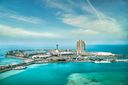
Featured coverage image. Source: Editorial desk.
Florida's major aviation hub has officially rebranded as President Donald J. Trump International Airport. Discover details on the name change, updated airport codes, and the impact on passenger operations.
Florida's major aviation hub has officially rebranded as President Donald J. Trump International Airport. Discover details on the name change, updated airport codes, and the impact on passenger operations.
Florida's vibrant Palm Beach County has ushered in a new era for its primary aviation hub, as Palm Beach International Airport (PBI) officially adopted the name "President Donald J. Trump International Airport" on July 9, 2026. This significant change, enacted through state legislation, marks a historic moment, making it the first time a sitting U.S. President has a major commercial airport named in their honor. The renaming reflects a blend of political tribute, economic considerations, and an ongoing public discourse.
The President Donald J. Trump International Airport is the newly designated name for the public airport located just west of West Palm Beach, Florida, serving as the primary commercial aviation hub for Palm Beach County. The change officially took effect on July 9, 2026, signifying a rebranding intended to honor the sitting President and a resident of Palm Beach County.
This renaming is more than just a change on paper; it involves a comprehensive overhaul of signage, branding, and digital presence across the airport's facilities, which will be implemented in phases over the coming weeks and months. While the visual transformation is underway, airport officials have assured the public that core operations, flight schedules, and services will continue without interruption.
The path to renaming the airport began in November 2025, when Republican Florida State Representative Meg Weinberger introduced a proposal to rename Palm Beach International Airport. The initiative gained momentum and, in February 2026, the Florida Legislature passed a bill with a strictly partisan vote: 81-30 in the House and 25-11 in the Senate. Florida Governor Ron DeSantis signed this legislation into law on March 30, 2026, which preempted local authority over naming major commercial service airports in Florida and mandated the renaming.
Proponents of the change, like Representative Weinberger, stated that "President Trump is the most consequential president of our lifetime and a resident of Palm Beach County, which makes it only fitting to honor him, like many other presidents before him, by naming our airport Donald J. Trump International." This sentiment highlights a desire to recognize the President's connection to the region and his perceived national impact.
The renaming of a major airport is a significant undertaking with substantial financial implications. The Palm Beach County Department of Airports estimates the total cost of implementing the name change at approximately $5.5 million.
The breakdown of these costs includes:
Regarding funding, the State of Florida appropriated $2.75 million towards the project. The remaining costs are expected to be covered by the Department of Airports' existing operating budget and capital improvement program, with assurances that no local property tax dollars will be used for the transition. However, this allocation has raised concerns among some county staff who, in late 2025, sent a letter to state legislators expressing worries that utilizing airport reserve funding could potentially jeopardize other safety and improvement projects.
One of the most notable and potentially impactful aspects of the renaming for travelers and aviation professionals is the change in airport codes. While the airport officially transitioned its name on July 9, 2026, the various identifiers used in air travel are being updated in phases.
| Identifier Type | Old Code | New Code | Effective Date | Primary User/Purpose |
|---|---|---|---|---|
| FAA Locational Identifier (LID) | PBI | DJT | July 9, 2026 | Pilots, air traffic controllers, aviation operations |
| International Civil Aviation Organization (ICAO) Identifier | KPBI | KDJT | July 9, 2026 | Pilots, air traffic controllers, aviation operations |
| International Air Transport Association (IATA) Code | PBI | DJT | August 18, 2026 | Passengers (ticketing, baggage, flight info) |
Until August 18, 2026, travelers booking flights, checking baggage, or viewing airline schedules are advised to continue using the code "PBI." After this date, "DJT" should be used for passenger-facing systems. Airline industry analyst Henry Harteveldt of Atmosphere Research Group noted that airlines have implemented "hard coding" in their systems to ensure a smooth transition, and initial searches using "PBI" will likely redirect to flights from the newly coded "DJT."
Airport officials have consistently reiterated that the name change is primarily a branding exercise and will not affect the airport's ownership, governance, legal status, or operational control by Palm Beach County.
Before its recent transformation, the facility was known as Palm Beach International Airport for decades, a name it adopted in 1948. Its origins trace back to 1936 when it opened as Morrison Field, named in honor of Grace K. Morrison, a pivotal figure in its early planning and organization.
Morrison Field played a crucial role during World War II, serving as Morrison Army Airfield and later transitioning to civilian operations post-war. In 1988, the current main terminal, the David McCampbell Terminal, was dedicated, significantly enhancing its capacity and passenger comfort. Over the years, Palm Beach International Airport garnered numerous accolades, including being recognized as the 5th Best Airport in the U.S. by Condé Nast's 2024 Readers' Choice Awards and the 3rd Best U.S. Airport in Travel + Leisure Magazine's 2024 World's Best Awards. It has consistently served millions of passengers annually, accommodating over 8 million in recent years.
This rich history now forms the backdrop for its new identity as the President Donald J. Trump International Airport.
The renaming of such a prominent public facility has naturally ignited a passionate debate, reflecting the broader political landscape. Public reactions have been notably polarized, ranging from strong support to vehement opposition.
Many residents and travelers have expressed mixed feelings, with some indicating indifference, stating that the name change is a "distraction" and that their primary concern is the smooth functioning of the airport. However, a significant segment of the public voiced strong opposition. Reports indicate that the airport was inundated with dozens of angry messages, including a bomb threat (the status of any investigation into which is unclear) and pledges from individuals to boycott the airport once the name change took effect. Critics argued that the Republican-controlled Florida Legislature ignored the voices of Palm Beach County residents by pushing through the bill without adequate local input. U.S. Congresswoman Lois Frankel (FL-22) condemned the move, stating, "It's misguided and unfair that the Republican-controlled Florida legislature ignored the voices of Palm Beach county by pushing forward a bill to rename Palm Beach international airport without giving county residents a real opportunity for input."
Adding to the controversy, an FAA-licensed pilot, George Poncy Jr., filed a lawsuit challenging the renaming, citing concerns about safety due to "asynchronous updates" in aviation systems and a potential violation of the county's home rule authority.
A unique aspect of this renaming involves trademark considerations. In February 2026, the Trump Organization filed trademark applications for potential airport names, including "Donald J. Trump International Airport" and "President Donald J. Trump International Airport." Subsequently, on May 5, 2026, the Palm Beach County Commissioners narrowly approved a trademark and licensing agreement with DTTM Operations LLC, a company reportedly run by Donald Trump Jr.
This agreement, passed with a 4-3 vote including support from one Democrat and three Republican members, grants the Trump company significant control over how the President's name and likeness are used in the airport's rebranding. Specifically, it allows the Trump Organization to approve or reject marketing materials that reference the President's biography and mandates that airport retailers procure branded merchandise exclusively from vendors designated by the Trump trademark entity. While the Trump Organization has stated it will not receive direct financial consideration or royalties from the renaming itself, legal experts like trademark lawyer Josh Gerben note that these provisions could create avenues for indirect financial benefit and control over messaging. For example, Trump-affiliated entities could potentially sell airport-branded goods off-site.
This arrangement has sparked ethical concerns among some lawmakers and observers, highlighting the unprecedented nature of a sitting President having such a direct commercial interest in a public facility bearing their name.
The airport was renamed to honor President Donald J. Trump, a resident of Palm Beach County, following legislation passed by the Florida Legislature and signed into law by Governor Ron DeSantis on March 30, 2026. This action made him the first sitting U.S. President to have a major commercial airport named in his honor.
The official name change to President Donald J. Trump International Airport took effect on July 9, 2026. The FAA and ICAO identifiers (for pilots and air traffic control) also changed to DJT and KDJT on this date. However, the three-letter IATA code (used by passengers for booking and baggage) will change from PBI to DJT on August 18, 2026.
The total estimated cost for the renaming is approximately $5.5 million. The State of Florida has appropriated $2.75 million towards this cost, with the remaining funds to be covered by the Palm Beach County Department of Airports' operating budget and capital improvement program. No local property tax dollars are being used.
According to airport officials, the name change is solely a branding initiative and will not interrupt airport operations, services, flight routes, or schedules. The airport's ownership and governance by Palm Beach County remain unchanged. Passengers should anticipate a phased rollout of new signage and branding, but core travel experiences are expected to continue smoothly.
Featured image by Guy Tsror on Unsplash
AI BlogX is committed to high editorial standards. For time-sensitive or critical topics, please verify claims against original primary sources.
Authoritative and trend-focused coverage across business, sports, entertainment, health, lifestyle, politics, science, and technology.
More Desks
© 2026 AI BlogX. All rights reserved.
Trend-focused editorial workflow
Stories are monitored from trending signals, then processed for accurate summaries, fact-checking, and desk oversight.
Editorial policy