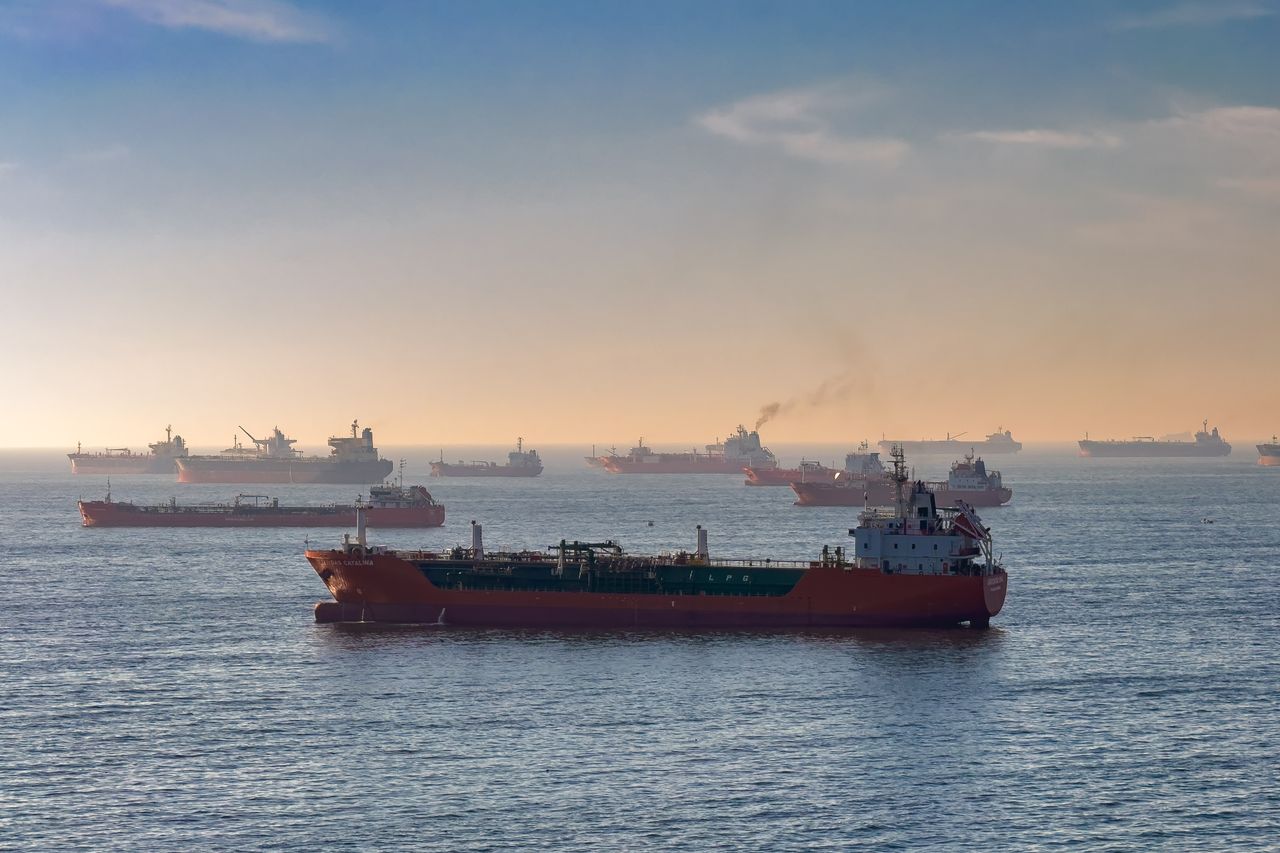
Featured coverage image. Source: Editorial desk.
On April 19, 2026, the Strait of Hormuz remains a flashpoint of global geopolitical tension. While Iran has declared the vital waterway conditionally open for commercial traffic after an earlier closure, the imposition of transit permits and tolls, coupled with a persistent U.S. naval blockade on Iranian ports, signifies a precarious and unprecedented escalation. This intricate situation holds profound implications for global energy markets, international law, and the fragile stability of the Middle East.
On April 19, 2026, the Strait of Hormuz remains a flashpoint of global geopolitical tension. While Iran has declared the vital waterway conditionally open for commercial traffic after an earlier closure, the imposition of transit permits and tolls, coupled with a persistent U....
Today, April 19, 2026, the global spotlight remains firmly fixed on the Strait of Hormuz, a narrow maritime artery whose fate reverberates through international markets and geopolitical corridors. While the dramatic full closure that gripped the world in early March has eased, the situation remains far from resolved. Instead, we are witnessing a new, more nuanced, yet equally perilous phase: a conditional reopening by Iran, immediately complicated by a robust U.S. naval blockade targeting Iranian ports. This delicate balance of restricted passage and active interdiction has intensified the standoff between Tehran and Washington, creating an unprecedented challenge to global energy security and freedom of navigation.
To understand the gravity of the current crisis, one must first grasp the unparalleled strategic importance of the Strait of Hormuz. This 21-mile-wide choke point, nestled between Oman and Iran, serves as the sole maritime passage connecting the oil-rich Persian Gulf to the open ocean. Its narrow navigable channels, just 2 miles wide (3.7 km) for inbound and outbound shipping, make it incredibly vulnerable to disruption. [1, 2]
The statistics underscore its critical role:
Any significant disruption here, even temporary, sends shockwaves through global markets, affecting economies from Asia to Europe, with major importers like China, India, Japan, and South Korea being particularly reliant on its continuous flow.
The current crisis did not emerge in a vacuum. It is a direct consequence of a rapidly intensifying standoff that has characterized U.S.-Iran relations throughout early 2026. Tensions escalated significantly in January 2026 amidst Iran's severe crackdown on widespread anti-government protests, leading to a substantial U.S. military buildup in the Middle East—the largest since the 2003 invasion of Iraq. [9, 10] Diplomatic efforts, including indirect negotiations in Oman and Pakistan, proved insufficient to de-escalate the situation. [12, 13]
February 28, 2026: The Spark of Conflict and Initial Closure
The situation dramatically escalated on February 28, 2026, when the United States and Israel launched a series of airstrikes on Iran, targeting military and government sites, and reportedly resulting in the assassination of Supreme Leader Ali Khamenei and other Iranian officials. Iran swiftly retaliated with missile and drone strikes against Israel, U.S. bases in the region, and U.S.-allied Gulf states. Crucially, Iran also announced the closure of the Strait of Hormuz, disrupting global trade and plunging the region into what has been termed the '2026 Iran war'. [9, 4]
The Economic Fallout of the Initial Closure
The impact of this initial closure was immediate and severe. Shipping traffic plummeted, with tanker movements dropping by approximately 70% almost instantly, and eventually to near zero, as major shipping firms suspended operations due to safety concerns and skyrocketing insurance premiums. [4, 15]
Key economic repercussions included:
While the phrase "Iran Closes Strait of Hormuz on April 19, 2026" captures the heightened tensions, the reality on the ground today is more complex than a simple, absolute closure. Recent developments indicate a shifting landscape:
This creates a precarious situation where commercial vessels are theoretically able to transit but face Iranian conditions (permits, tolls) and a simultaneous U.S. blockade if they are linked to Iranian ports. The U.S. presence, while ensuring freedom of navigation through international waters, is also actively restricting access to Iranian ports, thus contributing to the economic pressure on Tehran. [21, 22]
These actions by both Iran and the U.S. raise significant questions under international maritime law. The principle of freedom of navigation, a cornerstone of international law, is codified in the UN Convention on the Law of the Sea (UNCLOS). Although neither the U.S. nor Iran has ratified UNCLOS, both generally acknowledge its provisions as customary international law. [24, 25]
UNCLOS outlines the right of "transit passage" through international straits, which allows for continuous and expeditious transit for ships and aircraft, and cannot be impeded or suspended. Iran's imposition of transit permits and tolls directly challenges this principle, as it constitutes an impediment to free passage. [4, 12]
The U.S. naval blockade, while aimed at Iranian ports, also operates in the context of international waters and straits. While nations have rights to enforce sanctions, a naval blockade can be a complex and potentially escalatory act under international law, particularly concerning its implications for third-party shipping not directly involved in sanctionable activities. This dual layered control—Iranian restrictions within the Strait itself and a U.S. blockade outside Iranian ports—illustrates the profound legal and operational complexities of the current crisis.
The United States maintains a substantial military footprint in the Persian Gulf region, aimed at deterring adversaries and protecting vital interests. The U.S. Navy's Fifth Fleet is headquartered in Manama, Bahrain, serving as a critical hub for maritime operations. [28, 21] Additionally, major air bases in Qatar (Al Udeid), UAE (Al Dhafra), and Kuwait (Camp Arifjan) host thousands of U.S. personnel and advanced air assets. [29, 10]
While the U.S. possesses overwhelming military superiority, including naval dominance capable of reopening sea lanes, Iran's strategy often relies on asymmetric capabilities. Tehran has invested in a fleet of nimble boats, anti-ship cruise missiles, and sea mines, which, while unlikely to achieve a prolonged, full closure against a determined U.S. effort, can inflict significant economic and military costs through harassment and temporary disruptions. [30, 31]
The U.S. decision to implement a blockade on Iranian ports, rather than solely focusing on forcing open the Strait for all traffic, reflects a strategic choice to exert economic pressure while avoiding a direct military confrontation over the act of transit through the Strait itself, especially since Iran has conditionally reopened it. However, the presence of eight Aegis guided missile destroyers in the Arabian Sea and the deployment of elite paratroopers underscore the readiness for further military action if the situation deteriorates. [21]
Even with the Strait's conditional reopening, the economic fallout is far from over. The initial closure in early March inflicted severe damage, and the current state of restricted passage and active blockade continues to impose significant costs:
If the underlying supply and logistical stresses persist, as experts suggest they might for months, global inflation could be further fueled, contributing to an economic downturn and heightened risks of stagflation and recession.
| Commodity / Metric | Impact | Source |
|---|---|---|
| Brent Crude Price Peak | Surged past US$100, reaching US$126 per barrel | |
| Global Oil Supply Loss | Tipped to slide by 8 million barrels per day in March; 20% of global oil supplies disrupted | |
| Global LNG Disruption | Significant volumes impacted; Qatar and UAE exports (19% of global LNG trade) stranded | |
| Global Fertilizer (Urea) | Gulf region accounts for ~30-35% of global urea exports; supply stoppage projected to spike costs | |
| Diesel Fuel Price Increase | Rose by 38% | |
| Jet Fuel Availability | Europe had "maybe six weeks or so" of remaining jet fuel supplies; airlines cutting flights | |
| Global Seaborne Trade | Tanker traffic dropped by ~70% initially, then to near zero; ~750 ships caught in or around Strait |
The current crisis underscores the urgent need for a diplomatic resolution, yet the path remains fraught with challenges. While new U.S. proposals are reportedly under review by Iran's top security body, both sides continue to maintain hardline rhetoric. [12, 13] Washington insists on no "blackmail" from Tehran regarding the Strait, while Iran stresses "no compromise, retreat, or leniency" in defending national interests. [12]
The ongoing negotiations in various regional capitals, including Oman and Pakistan, reflect growing international concern over the potential for further destabilization. However, the complex interplay of military posturing, economic pressure, and deeply entrenched distrust makes any lasting agreement difficult to achieve. The U.S. continues to demand the cessation of uranium enrichment, while Iran rejects demands extending beyond the nuclear issue to its missile program and regional proxies. [13]
As April 19, 2026, draws to a close, the situation in the Strait of Hormuz remains a testament to the volatility of global geopolitics. Iran's conditional reopening, intertwined with its imposition of tolls and transit permits, and the simultaneous U.S. naval blockade on Iranian ports, has created a dangerous and unpredictable environment. This is not merely a regional dispute; it is a global crisis with far-reaching consequences for energy markets, international trade, and the very principles of maritime freedom.
The world watches anxiously as the standoff between Iran and the U.S. continues to unfold. A sustainable de-escalation, respecting international law and ensuring unimpeded passage for legitimate commerce, is paramount to avert a deeper economic crisis and safeguard global stability. The Strait of Hormuz, the world's energy jugular, demands nothing less than a concerted international effort towards peace and open dialogue, rather than continued brinkmanship and confrontation.
Featured image by İrfan Simsar on Pexels
AI BlogX is committed to high editorial standards. For time-sensitive or critical topics, please verify claims against original primary sources.
Authoritative and trend-focused coverage across business, sports, entertainment, health, lifestyle, politics, science, and technology.
More Desks
© 2026 AI BlogX. All rights reserved.
Trend-focused editorial workflow
Stories are monitored from trending signals, then processed for accurate summaries, fact-checking, and desk oversight.
Editorial policy