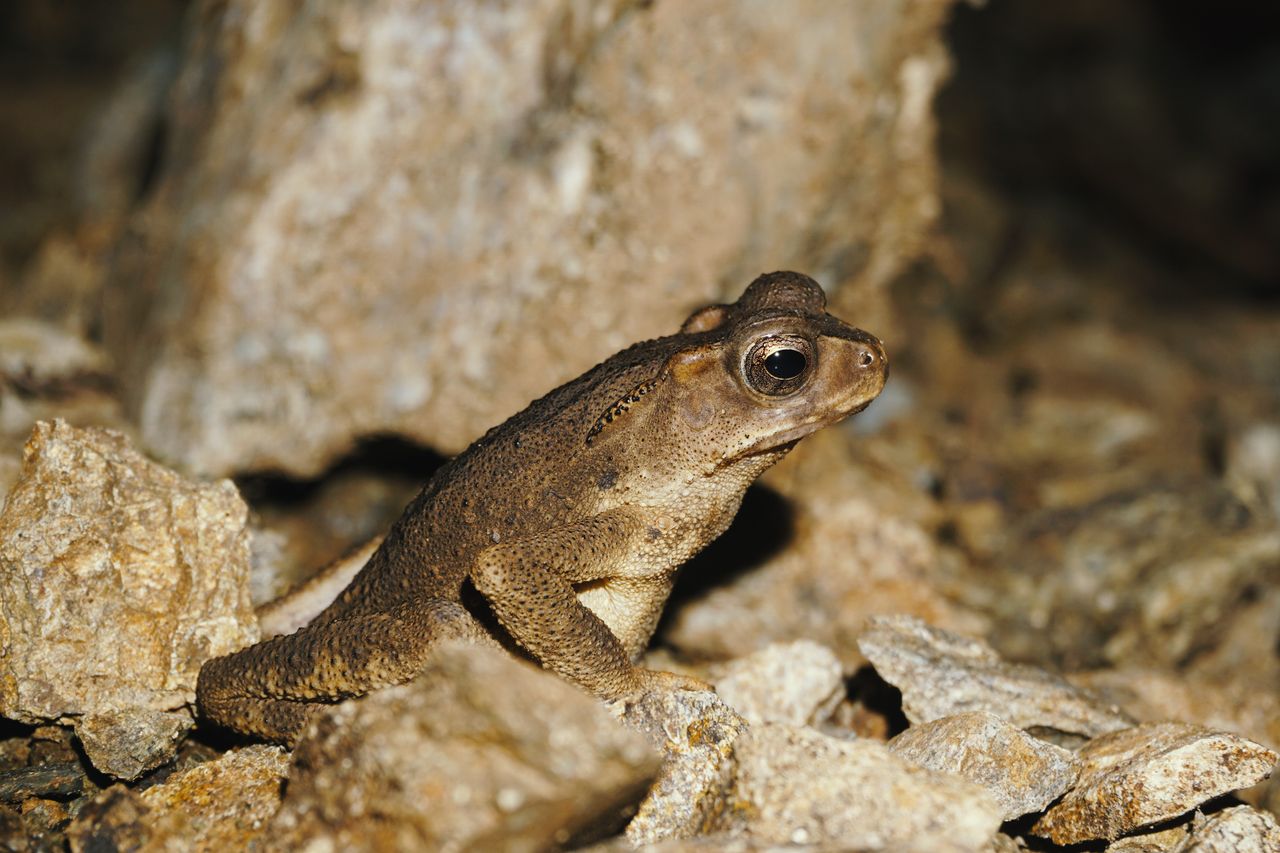
Featured coverage image. Source: Editorial desk.
Researchers have discovered a new extinct species of amphibian, the Ice Age Spadefoot Toad (Spea labreae), hidden in decades-old collections from the La Brea Tar Pits. This rare find serves as a crucial climate proxy, offering new insights into Pleistocene Los Angeles.
Researchers have discovered a new extinct species of amphibian, the Ice Age Spadefoot Toad (Spea labreae), hidden in decades-old collections from the La Brea Tar Pits. This rare find serves as a crucial climate proxy, offering new insights into Pleistocene Los Angeles.
The La Brea Tar Pits, a pulsating reservoir of prehistoric history nestled directly beneath the modern urban landscape of Los Angeles, has revealed a captivating secret from the late Pleistocene epoch. Researchers have officially identified a new species of extinct amphibian: the Ice Age Spadefoot Toad (Spea labreae). Published in the Journal of Vertebrate Paleontology, this discovery demonstrates that even after a century of continuous study, Earth's most famous asphalt seeps still hold transformational surprises.
For over one hundred years, paleontologists have mined La Brea's sticky bitumen to reconstruct an iconic ecosystem dominated by saber-toothed cats, dire wolves, and colossal mammoths. However, the identification of Spea labreae shifts the spotlight onto microfossils—the delicate, often overlooked creatures that inhabited the understory of Pleistocene California. This small amphibian provides invaluable evidence regarding localized microclimates, hydrological cycles, and environmental transformations across North America during the last Ice Age.
The La Brea Tar Pits represent the world's premier urban paleontological site, situated within Hancock Park in Los Angeles, California. Formed by natural crude oil seeping upward through subterranean fissures over the past 50,000 years, these asphalt traps have preserved millions of animal and plant fossils, earning designation as a global Geological Heritage Site.
As subterranean crude oil migrated to the surface, light hydrocarbons evaporated, leaving behind dense, viscous pools of natural asphalt. Animal entanglements in these tar pools triggered predatory feedback loops: a single trapped herbivore attracted scavengers and predators, which subsequently became ensnared themselves. Over millennia, this process created dense asphaltic fossil deposits.
While megafauna dominate popular imagination, the asphalt seeps preserved delicate organisms with extraordinary fidelity. Microfossils—including small bones, plant seeds, shell fragments, and chitinous insect remains—provide a granular look at past ecosystems. Though amphibian bones usually deteriorate rapidly due to their thin, porous matrix, bitumen's airtight seal arrested bacterial decay, shielding delicate skeletal fragments of tree frogs, salamanders, and now, Spea labreae.
Ongoing work through the Samuel Oschin Global Center for Ice Age Research at La Brea Tar Pits maintains active excavation and cataloging efforts. Even during major infrastructural upgrades, research continues to yield fresh insights from vast physical archives amassed over generations.
Spea labreae is an extinct species of spadefoot toad from the late Pleistocene epoch, distinguished by unique cranial and postcranial skeletal elements that separate it from modern relatives within the genus Spea. It represents only the second extinct Pleistocene amphibian species ever described in North America.
The discovery of Spea labreae expands the known biodiversity of Pleistocene amphibians. The specific epithet labreae directly honors the La Brea Tar Pits, forever anchoring this amphibian to the asphalt deposits where its tiny bones lay preserved for tens of thousands of years.
Unlike true toads of the family Bufonidae, members of the genus Spea belong to the family Scaphiopodidae—a lineage of primitive burrowing frogs. Spea labreae possessed distinct diagnostic osteological features, particularly in the structure of the pelvic girdle and limb bones, setting it apart from its extant cousin, the Western Spadefoot (Spea hammondii). These minute anatomical nuances confirm that Pleistocene North American frog lineages were more diverse than previously recognized.
Museum Archive Excavation refers to the analytical process of re-examining previously collected, cataloged fossil specimens stored in repository collections using modern diagnostic tools, comparative morphology, and analytical frameworks.
The breakthrough revealing Spea labreae occurred not beneath open skies in an active excavation pit, but inside the temperature-controlled specimen cabinets of the museum archive. The foundational fossil fragments were original specimens excavated in the 1950s that had remained stored alongside unassigned microfossil matrix for decades.
Researchers examining the amphibian and reptile collections noted persistent anatomical traits across multiple small bones that did not align with known living species. Initial hypotheses considered paleopathology—bone deformities caused by infection or fracture healing—but extensive comparative analysis across hundreds of modern and fossil spadefoot specimens ruled out disease. The consistent repetition of distinct morphological features confirmed a distinct evolutionary lineage.
This discovery highlights the profound research potential contained within legacy museum collections. Tens of thousands of microfossil matrix samples collected during early 20th-century digs remain unexamined. As analytical techniques improve, these stored specimens frequently yield significant scientific breakthroughs without requiring new ground to be broken in the field.
A Climate Proxy is a biological, geological, or chemical record that preserved physical characteristics of the past, allowing scientists to reconstruct historical climatic and environmental conditions in the absence of direct meteorological measurements.
Because amphibians possess permeable skin and highly sensitive life-cycle dependencies on ambient water, moisture levels, and temperature, they act as sensitive environmental indicators. Large mammals can migrate hundreds of miles during droughts, but small amphibians are tied to localized microclimates. Consequently, the presence of a specific spadefoot toad species offers precise data on regional climate patterns.
[Environmental Trigger: Seasonal Rains]
                  │
                  ▼
[Subterranean Spadefoot Toads Detect Low-Frequency Vibrations]
                  │
                  ▼
[Mass Emergence from Sandy Soil Burrows]
                  │
                  ▼
[Explosive Breeding in Temporary Vernal Pools]
                  │
                  ▼
[Rapid Larval Metamorphosis Before Pools Evaporate]
The existence of Spea labreae indicates that late Pleistocene Los Angeles experienced localized hydrological conditions capable of supporting explosive amphibian breeding cycles. Modern spadefoot toads require loose, sandy soil for burrowing alongside temporary vernal pools created by seasonal rains. The presence of Spea labreae suggests that despite glacial ice sheets covering northern latitudes, Southern California featured seasonal rainfall, higher ambient humidity, and fertile floodplains that sustained diverse wetland microhabitats.
Fossorial Adaptations are structural, physiological, and behavioral specializations that enable an organism to dig, inhabit, and survive within subterranean environments.
Spadefoot toads are masters of subterranean survival. Their hallmark evolutionary feature is a hardened, keratinized blade—the "spade"—located on the outer edge of each hind foot. By moving their hind legs in an alternating circular motion, spadefoots slice through soil, rapidly digging backward underground to escape surface desiccation and freezing temperatures.
| Anatomical & Ecological Trait | Modern Spadefoot Toads (Spea spp.) | Ice Age Spadefoot Toad (Spea labreae) |
|---|---|---|
| Primary Digging Mechanism | Keratinized hind-foot spade | Inferred keratinized spade based on tarsal morphology |
| Pupil Morphology | Vertical, cat-like slits | Vertical slits (inferred via phylogenetic conservatism) |
| Skin Profile | Smooth, highly permeable skin | Smooth, moisture-sensitive skin matrix |
| Dormancy Strategy | Underground estivation for up to 10 months | Fossorial estivation during cold or dry seasonal phases |
| Preferred Microhabitat | Arid/semi-arid scrubland with sandy soil | Humid alluvial floodplains & vernal basins |
| Sensitivity Index | Exceptional bioindicator for local moisture | Critical Pleistocene climate proxy for coastal California |
These amphibians can remain dormant in subterranean burrows for up to ten months per year, encased in protective mucus layers to minimize water loss. When low-frequency sound vibrations from rainfall strike the ground, spadefoots emerge en masse to breed in temporary rain pools. Larval development occurs at extraordinary speeds, with tadpoles metamorphosing in as few as two weeks before temporary pools evaporate.
Microfossil Paleontology is the study of microscopic fossil remains—such as small bones, teeth, seeds, and ostracods—requiring specialized collection, magnification, and preparation techniques to reconstruct ancient ecosystems.
The identification of Spea labreae establishes a new framework for analyzing microfaunal assemblages within asphaltic matrix. Historical paleontology heavily prioritized large, spectacular mammalian skulls; however, microfossils provide broader statistical datasets for modeling environmental shift dynamics.
Future research initiatives leveraging this discovery focus on:
The identification of Spea labreae demonstrates that the narrative of prehistoric North America remains dynamic and continuously evolving. A tiny amphibian preserved in natural asphalt for thousands of years provides crucial context for understanding how ecosystems react to major climate shifts. As researchers combine advanced diagnostic technologies with meticulous physical cataloging, the La Brea Tar Pits will continue to reveal the intricate web of life that shaped our ancient world.
The La Brea Tar Pits is the world's only active urban paleontological research site. Naturally occurring asphalt seeps acted as passive traps for over 50,000 years, preserving millions of mammalian, avian, reptilian, amphibian, and plant specimens. The unique anaerobic chemical environment created by natural bitumen halts decomposition and preserves intricate skeletal structures down to microfossil dimensions.
Amphibian bones are small, thin, porous, and lack the mineral density seen in larger mammal skeletons. In most natural environments, scavengers, bacterial decay, acidic soil conditions, and physical weathering destroy amphibian remains long before fossilization can take place. Special preservation traps—such as the asphalt seeps at La Brea—are required to seal and protect these fragile bones.
Amphibians depend heavily on local ambient moisture, temperature stability, and standing water for survival and reproduction. Unlike large mammals that travel long distances to adapt to climate shifts, spadefoot toads are direct indicators of local environmental conditions. Finding Spea labreae in late Pleistocene strata confirms that ancient Los Angeles experienced specific seasonal precipitation patterns and localized wet environments.
The Samuel Oschin Global Center for Ice Age Research serves as the primary scientific engine behind excavations and specimen cataloging at the La Brea Tar Pits. Its team manages millions of preserved specimens, facilitates international collaborative research, leads active digs, and systematically analyzes historical collections to unlock insights into prehistoric ecology and global climate change.
Featured image by Fandy Much on Pexels
AI BlogX is committed to high editorial standards. For time-sensitive or critical topics, please verify claims against original primary sources.
Authoritative and trend-focused coverage across business, sports, entertainment, health, lifestyle, politics, science, and technology.
More Desks
© 2026 AI BlogX. All rights reserved.
Trend-focused editorial workflow
Stories are monitored from trending signals, then processed for accurate summaries, fact-checking, and desk oversight.
Editorial policy